



Mother Nature can be intimidating, between the unpredictability of weather; the uncertainty around insects, poison ivy, and other wildlife; and the challenge of finding a safe, accessible space to exercise. Consider the following tips for overcoming such barriers and maximizing your time outdoors.
1) Wear appropriate clothing for the temperature and elements.
If you live in a cold climate, investing in some key winter gear, such as warm clothing, can be a game-changer for maximizing time in nature. Important items for other seasons include wide-brim hats and protective clothing for sunny conditions, moisture-wicking materials to stay dry in all temperatures, and waterproof shoes and layers for rainy days (for more advice on how to dress for your next chilly-weather workout see “Expert Answers: Winter Workout Clothes“).
2) Train your body to acclimate to hotter or colder weather.
“Cold” is relative. “If you never stop being outside all year long, you have a natural progression — so by the time winter comes, it’s not a big deal,” says Robinson.
As for coping with warm weather, research shows that we can acclimate to heat within one to two weeks. Heat exposure trains our bodies to increase sweat production, which helps us cool down more effectively. (Get guidance for safely building your heat tolerance here.)
3) Be prepared for bugs.
Educate yourself about what kinds of pests you may encounter in nature, and protect yourself by wearing mosquito repellent and checking for ticks. (Learn what to do if you find a tick at “7 Ways to Protect Yourself From Ticks.”)
4) Know your plants.
Be able to recognize poison ivy, poison oak, and poison sumac so you can avoid them. If you think you’ve come in contact with a poisonous plant, wash your hands with soap and water as soon as possible.
5) Try not to go alone.
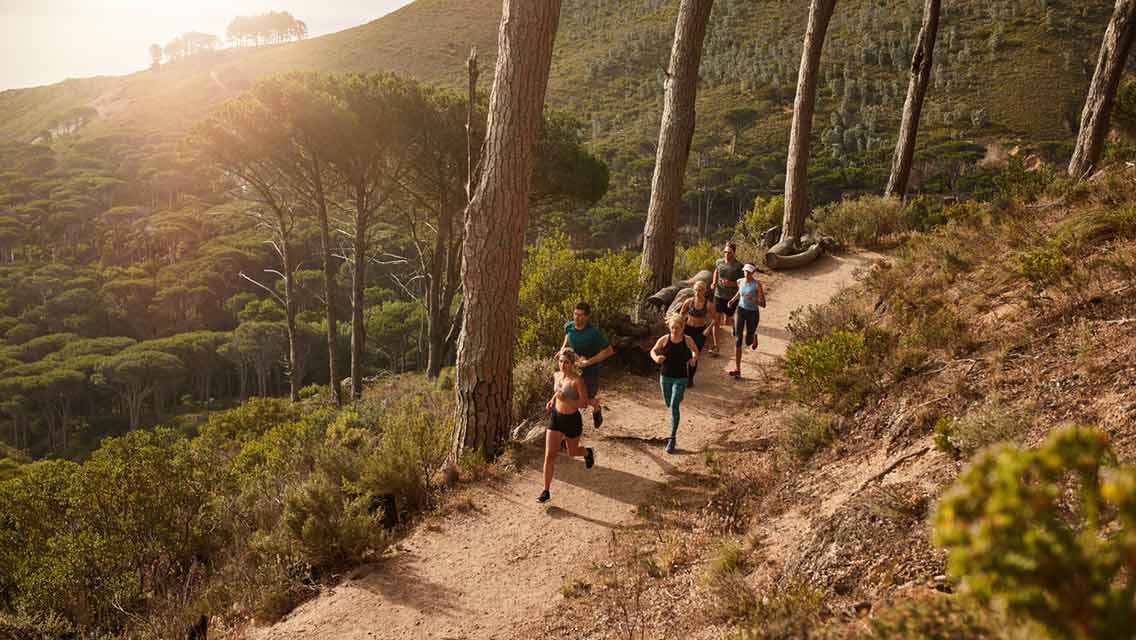
Heading out with a friend or group can be an important safety measure. It can also provide a powerful combination of camaraderie, support, accountability, and motivation. (Discover the benefits of moving your body in the company of others at “Solo Athlete? Here’s Why Exercising With Other People Matters.”)
Take It Outside
Working out in any setting is good for you, but moving your body in nature can lower anxiety, improve concentration and creativity, and foster a deeper sense of connection and purpose. Learn more at “5 Great Reasons to Exercise Outdoors,” from which this article was excerpted.