




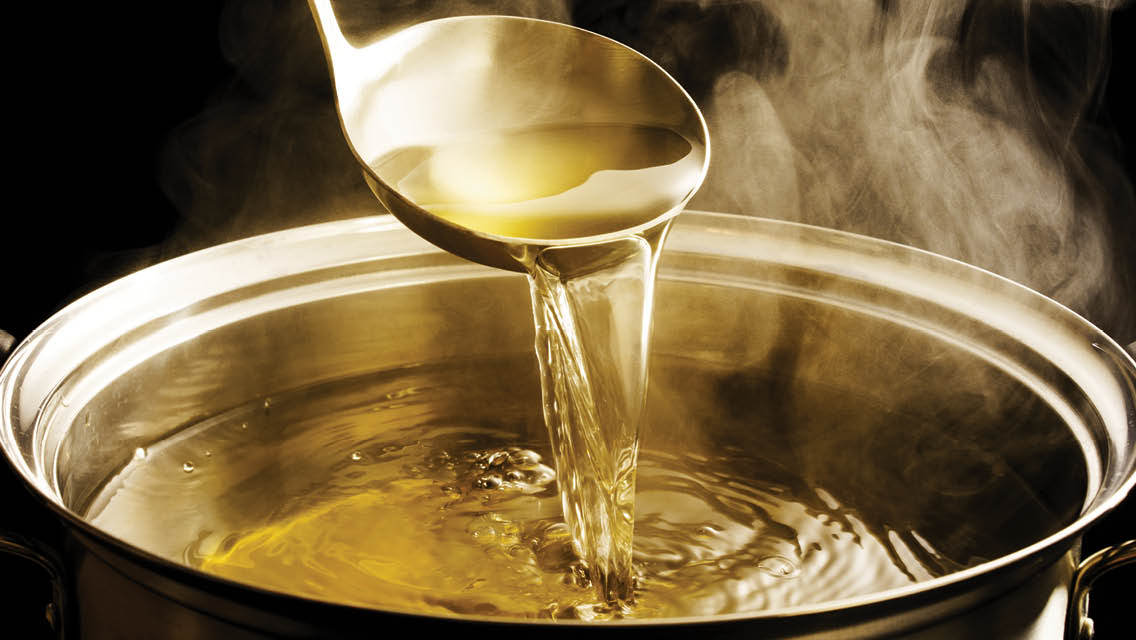
Liquids may be the hardest-working ingredients in the kitchen. They cook rice, poach fish, steam dumplings, and braise vegetables. They transform a random assortment of leftovers into a soup. They give texture and structure to some of our favorite foods, like fork-tender ribs and delicate layer cakes. Along the way, liquids pull a dish together by helping flavors bloom, develop, and mingle.
For the home cook, all of that utility adds up to a whole lot of opportunity for liquid creativity.
Think about the flavors of a nut brown ale unfurling across your palate, lightly fruity and full of malty cocoa and toasted hazelnut. Or the sophisticated floral sweetness of jasmine tea. Or consider the tangy notes of a classic dill-pickle brine: salty, puckery, and refreshing.
If you’re not cooking with all that, you’re missing out. Everyday liquids like beer, tea, wine, pickle juice, and coffee can lend a wealth of flavor and complexity to your dishes.
Here’s how to put them to use in your favorite recipes.
Beer
“Beer gives home cooks a lot to work with,” explains Jackie Dodd-Mallory, a Seattle-based food writer and founder of The Beeroness. She ought to know: She’s written several books (as Jacquelyn Dodd) about cooking with beer.
 Beer has a minimum of four base ingredients (most wines and spirits have only one or two), and each brings a lot of variety. “Take hops,” Dodd-Mallory says. “They’re bred to have very specific flavor notes: tropical, citrus, herbal. Not only that, but you have carbonation, which works really well in baking.”
She uses flat leftover beer to tenderize meat. The beer’s acids and tannins break down the meat, infusing it with moisture and flavor. Malty beers, like porter or brown ale, boast rich, toasty notes that can enhance the flavor of everything from pulled pork to a Thanksgiving turkey.
For lighter fare, try lighter beer. Dodd-Mallory uses a fruit-forward Belgian-style pale ale or a malty pilsner to make an elegant béarnaise, which she often serves with tender asparagus and a poached egg. (Try her recipe below.)
Bakers, here’s a sourdough shortcut: Use sour beer to feed your starter. “[It has] the same wild yeast and bacteria that give sourdough its flavor,” Dodd-Mallory says. “In bread, sours become this kind of baker superliquid for replacing water — you have the grains, the yeast, and the carbonation for leavening, and then all that great tang too.” (Learn how to make a gluten-free sourdough starter.)
Tea
We drink tea for pleasure, for its health benefits, or simply to wake up. Why not cook with it? “Think of tea like a spice or a spice blend,” says Gina Amador, former minister of creativity for The Republic of Tea in Larkspur, Calif., who often cooks with brewed tea to infuse her food with more flavor.
 Black teas offer bold, malty flavors and plenty of tenderizing tannins. A smoky lapsang souchong can create a rich sauce: Combine it with an acid, like red-wine vinegar, and use it to deglaze a pan, then add butter and aromatics.
Amador also recommends cooking with chai, with its warming spices — think cinnamon, ginger, star anise, cloves, or black pepper. “Make a concentrate,” she says. “It’s amazing in barbecue sauce and anywhere you use vanilla, like shortbread.” (Try our recipe for Chai Tea Concentrate.)
Oolong’s floral undertones are great for poaching fish and chicken — or adding savory depth to a veggie soup. Sweet, nutty African rooibos tea makes a fine cooking liquid for quick grains, like couscous and quinoa.
Tea can also give other liquids a boost. Amador suggests steeping bags of chai in chicken broth for soup; Earl Grey tea in gin for a citrusy bergamot-infused martini; or hibiscus tea in vinegar — those bold berry notes will be great anywhere you need some zing.
(Try one of these seven tea recipes to make teatime more delicious.)
Coffee
Strong-brewed coffee is a natural for a low-and-slow braise, like with beef or lamb. Combined with spicy aromatics and red wine, it yields fork-tender meat with serious Sunday-supper vibes.
 Amador throws a shot of espresso in her turkey chili for a robust depth of flavor. The espresso’s toasty chocolate notes and bitter edge make all the warming spices in the chili a little bolder while rounding out the tomato’s acidic edges.
Coffee also has plenty of uses beyond the savory. Saad’s Lebanese foodways include French culinary influences — notably pastry. She dunks ladyfingers in dark coffee for tiramisu. Or better yet, her favorite use for coffee is folding it into pastry cream and piling it onto a layered walnut cake.
Whether it’s sweet Kenyan or citrusy Costa Rican, light- to medium-roast coffees are less bitter and more acidic. That flavor profile complements the rich, tangy sweetness of balsamic vinegar, and you’ll sometimes see coffee and vinegar combined in vinaigrettes, glazes, and even lattes.
“Always use fresh coffee for drinking or cooking,” Saad advises. “It loses its goodness if it sits around, and you absolutely cannot reheat it.”
Pickle Juice
Lebanese chef and cookbook author Lina Saad hardly ever has leftover pickle brine. “I never use vinegar if I can use pickle juice because it has that bright intensity — the layers of flavor that come with fermentation,” she explains.
 The London-based chef uses pickle juice to balance sweet, hot, and creamy flavors. For example, in her habanero-mango wing sauce, the sour pucker balances the fruit and contrasts boldly with the requisite blue cheese dressing.
Pickle juice with olive oil, cumin, and a bit of citrus juice makes a wonderful vinaigrette. The salty, sweet, and sour combination is a great addition to any salad.
You can add a splash of brine to any recipe in which you’d ordinarily use vinegar. It balances out the fats in deviled eggs, gives bloody marys a salty punch, and makes lentil soup sing.
And if you have a full jar of pickle juice? Amador suggests combining it with olive oil and seasoning to create a marinade for juicy poultry, such as a pickle-brined fried chicken.
Wine
Andrew Lim, executive chef at Perilla Korean American Fare and Korean American Steakhouse in Chicago, chooses his cooking wines based on a variety of characteristics, including terroir, tasting notes, and their transformative powers.
 He often turns to cheongju — the sweet, tangy byproduct of makgeolli, a Korean wine made with fermented grains. Its acidity and natural enzymes make it great for tenderizing meat. He uses it in marinades, to rinse fish after curing, and to deglaze a pan. “You’ll want to use a small amount of it,” he says. “But it adds a lot of umami that you don’t get from any other ingredient.” (Learn more about the fifth flavor, umami, at “Umami: The Secret Flavor.”)
Big, fruity red wines with middling tannins pair well with bold, complex flavors. Lim leans on reds for a twist on a Korean classic like galbi jjim — braised short ribs similar to a beef bourguignon — or to add complexity to a marinade. A crisp rosé or orange wine can offer tart citrus notes for lighter fare.
“I love cooking off aromatics, and then just as they’re starting to brown, hitting them with white wine,” he says. “That smell — it’s just beautiful.”
Fortified wines and sweet whites are better for poaching fruits, creating glazes, or macerating dried fruit. “Throw a raisin in a flavorful wine like sherry or port, and it plumps up into a super delicious fruit bomb,” he notes. “I’ll use them to garnish a cauliflower dish or make a gremolata.”
Pan-Seared Asparagus With Poached Egg and Beer Béarnaise Sauce
Recipe description in ital here if available.

Makes 4 servings • Prep time 5 minutes • Cook time 30 minutes
- ¼ cup pale ale
- 2 tbs. white-wine vinegar
- 1 tbs. chopped shallot
- 2 tbs. fresh tarragon leaves
- 1 tbs. fresh chervil leaves (or parsley)
- 4 large whole eggs, plus 3 large egg yolks
- 1 tsp. kosher salt, divided
- ½ cup unsalted butter (1 stick)
- 2 tbs. extra-virgin olive oil
- 15–20 thick asparagus spears, trimmed
- ½ tsp. freshly ground black pepper
- Combine the pale ale, vinegar, shallot, tarragon, and chervil in a small saucepan. Bring to a boil over medium-high and cook until reduced by half, about six minutes.
- Transfer the mixture to a blender and let cool for a few minutes. Add the egg yolks and ½ teaspoon of the salt. Blend on high for three minutes.
- Wipe out the saucepan and melt the butter over medium-high.
- Remove the circular cap from the blender lid. With the blender running, slowly pour in the melted butter in a steady stream. After all the butter has been added, replace the circular cap and continue to blend on high for two more minutes. The béarnaise sauce should resemble slightly thin mayonnaise.
- In a wide sauté pan, bring about 5 inches of water to a low simmer (but not a boil!).
- Crack each egg into a small prep dish or ramekin. One by one, gently slide each egg from its dish into the pot, making sure they aren’t touching. Cook for three to four minutes, until the whites have set but the yolks are still runny. Remove each egg with a slotted spoon and drain briefly on a paper towel before plating.
- Heat the olive oil in a skillet over medium-high.
- Add the asparagus and season with the pepper and remaining ½ teaspoon of salt. Cook, occasionally rolling the asparagus back and forth in the pan, until the spears start to brown and soften slightly, about five minutes.
- Divide the asparagus among four plates. Drizzle with the béarnaise sauce and top each with a poached egg. Serve.



This Post Has 0 Comments